The narrative fallacy is our tendency to create coherent stories with inevitable sequences out of disconnected facts and random events. Along with it we see linear cause-and-effect coherence when there is mere coincidence or correlation without cause and effect.
Dunning-Kruger effect is a cognitive bias that has found, perversely, when we have low ability, skill, or knowledge in a specific area we tend to overestimate our competence, and when we have comparatively good information and high skill we often underestimate our competence.
There seems to be a nexus with the narrative fallacy, the Dunning-Kruger Effect, and how we behave and make decisions most of the time. This seems to involve who we believe we are and how we perceive things.
I am going to go so far as to claim that with this view I can account for why our politics, among other relationships, are so messed up. I am also aware, ironically, that I could be engaging in the very biases I am identifying.
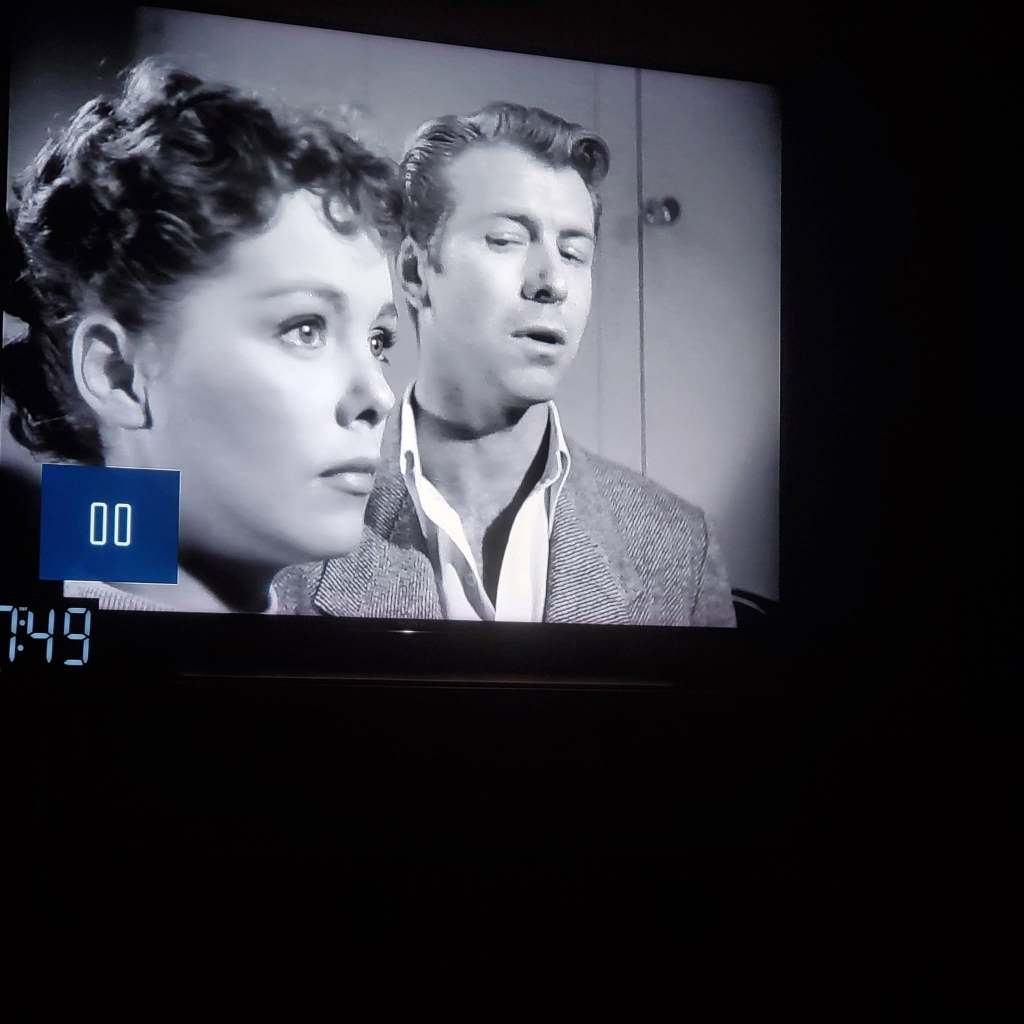
I was watching the movie The Asphalt Jungle (1950) again last night. I had seen it recently but when I tuned in for a moment, I found myself compelled by the performances and the camera work to persist in rewatching in the middle of the action.
I had forgotten a lot of the small details of action. Also, I am not always paying close attention or reflecting on what I am seeing and why I see it that way. I had forgotten how the first guy gets shot, for instance.
Sterling Hayden’s character Dix Handley slugs an armed security guard, who drops his revolver, which fires on impact, and the bullet hits Anthony Caruso’s character Louis Ciavelli in the lower torso.
This sets an unplanned detour of events in motion. Crime films almost always have this kind of random twist thrown in. Again, it is ironic that a meticulously planned narrative includes a random element within its fictional reality which ultimately must be seen as some kind of inevitability in retrospect.
The inevitability of the outcomes in good film noir is highly compelling. It is paradoxically simultaneously comfortable and uncomfortable. We are comfortable because the ready coherence is cognitively easy. We are uncomfortable because the suspense of not knowing what will happen next and we often are rooting for one character’s or another’s interests.
Movies are scripted. However, different from words on the page or a story we tell, the means by which movie-making makes sense to us play directly on our cognitive biases, particularly our desire for narrative coherence and causal connections.
Take the Kuleshov Effect: This when the same facial expression by an actor is interpreted differently depending on what is happening. Even though the actor’s face in a closeup is the same, viewers think the actor is showing different emotions (hunger, grief, or desire) based on what precedes or follows the shot.
Storytelling is likely as old language itself. Modern written fiction is relatively new, and the proliferation of literacy even more recent. Literacy is also more than the basic ability to turn marks on a page back into sounds that correspond with spoken words and associated meanings.
And thinking about matters can be even more complex.
All of this gets glossed over by everyone almost all of the time. Being smart has little or nothing to do with it. Anyone reading this is as just as likely to find it tedious or even annoying as interesting. I challenge anyone to say it is obviously useful and lifechanging.
We do not like to think about how we make sense of things. We just want to do it, no matter how little we know. We tell ourselves we have more important things to do. Our laziness is also efficient.
If that seems an accurate description of our feelings in these matters, it should be clear why Dunning-Kruger and cognitive biases and shortcuts are preferred states for us. Jumping to conclusions, when the stakes are relatively low, doesn’t seem like such a bad thing.
We who have grown up in the wake of technical innovations that have subsequently led to telecommunications and an explosion of multimedia infotainment do not think twice about how easily ideas are foisted on us constantly.
We may think and speak about the impact of social media. We may even acknowledge we are not exempt from these influences. But how often do we hold the concept clearly in our minds that even conversations or traffic situations have the same affects?
This is not about mindfulness. It isn’t about paying attention more or tricks we can use to avoid being tricked. Frankly, there are just too many charlatans and layers of misinformation historically. Whole disciplines, like economics, simply do not help us to see how things work clearly.
In a discussion about what to watch on TV with friends or family, for example, how often does Marx or Hayek come up, except perhaps as a kind of joke?
But little bits in these old movies have been sticking in my craw. Like grains of sand they grate on my sense of self. My efforts to understand psychology and neuroscience are as much about a desire to be more effective in my personal life as they have been about improving my professional sales.
And what I have discovered at last is what a lazy son of a bitch entirely lacking in ambition at all I turn out to be. This latest set of movie moments has meshed with the realization that more things are random than causal, and that outcomes are largely unpredictable.
Improvisational skills would seem to be more important than planning but planning is still necessary not so much for actual control but for the feeling of control and a comfort level required for our best performance levels.
Life is not scripted. Behavior is obviously a skill. So why are we mostly so inconsistent and poor at maintaining optimal performance so much of the time?