
Musical expression and interpretation develop earlier in individual humans than non-musical speech. Infants focus on and learn the musical components of speech earlier. Music is essentially emotional communication.
Body language is usually neglected in what little I have read or heard about in these studies and discussions. The tendency in research and discussion of it seems to shift strongly to focusing on language. The argument is that verbal referential communication provided an advantage. Music is seen as a less useful, impractical offshoot or biproduct.
I have yet to read anyone who claims that dance should also be considered. Body posture is a much greater part of communication and also obviously develops earlier. Other animals understand posturing and physical cues and interpret them quite well.
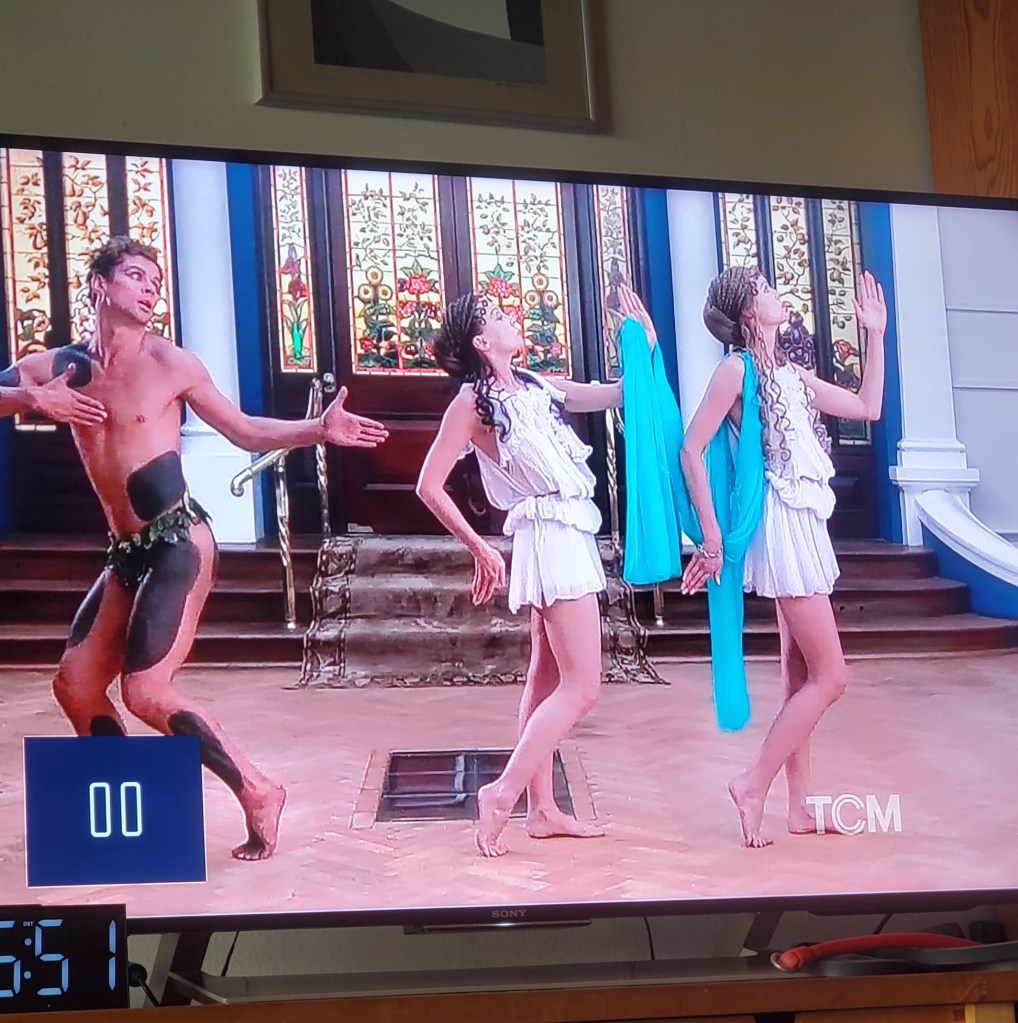
I have not done anything like an exhaustive study of this. There could be a whole school way ahead of where my thinking is.
Crying and laughter are likely primal sounds going way back, likewise shouting and whimpering, sighs, sobs, similar noises of triumph and joy.
Consider what babies do and what adults do around babies, and the emotional sounds we make from birth to the last gasp. Now add body language. Early hominids must have been posing and likely moving rhythmically, individually and in groups.
Why would that have not developed earlier than word-based speech? Imagine if our ancestors evolved to move like meercats in packs or even in small groups the way canines coordinate their hunts.
I have seen raccoons retreat and turn in echelons of rearguard action to confuse dogs. Herds of various herbivores likewise form phalanxes to fend off predators. And with prehistoric humans, is it ridiculous to think they would also have used body language to express themselves among themselves?
The muscles of the face and corresponding areas of our brains devoted to facial recognition are faculties of expression and interpretation which develop earlier in individuals.
It can be an error to assume individual development maps perfectly to the evolution of the species, but it also looks like that could be worth taking a serious look at in these cases.
Another note on the biological evidence: The openings or canals in the spine and skull where the nerves pass for control of respiration and lingual anatomy in humans are larger in humans than in apes and monkeys. This difference shows up in the fossils of earlier pre-humans.
What else would they have been doing with their lungs, tongues, and lips than making controlled noises to express themselves? People today still often talk in gibberish and can barely refrain from humming and singing inarticulately, to say nothing of whistling while they work.
All cultures dance and sing. We see body language and vocalization of emotion and the corresponding faculties in the brain develop earlier in infancy. These components of meaning persist and maintain greater weight in our behavior, and more significantly in how we read others’ behavior and intentions.
Is it perhaps a misplaced primacy we have assigned to reason and non-musical speech? The concept of rationality itself has largely been misunderstood, how we actually think and act only recently sorted out by studies which removed emotional processing.
Sorry, Mr. Spock, but are reason and rationality not more properly seen as the servant of our passions, as Hume would have it? Let us now add: What is human life without music and dancing?